FALAK SkyDrop
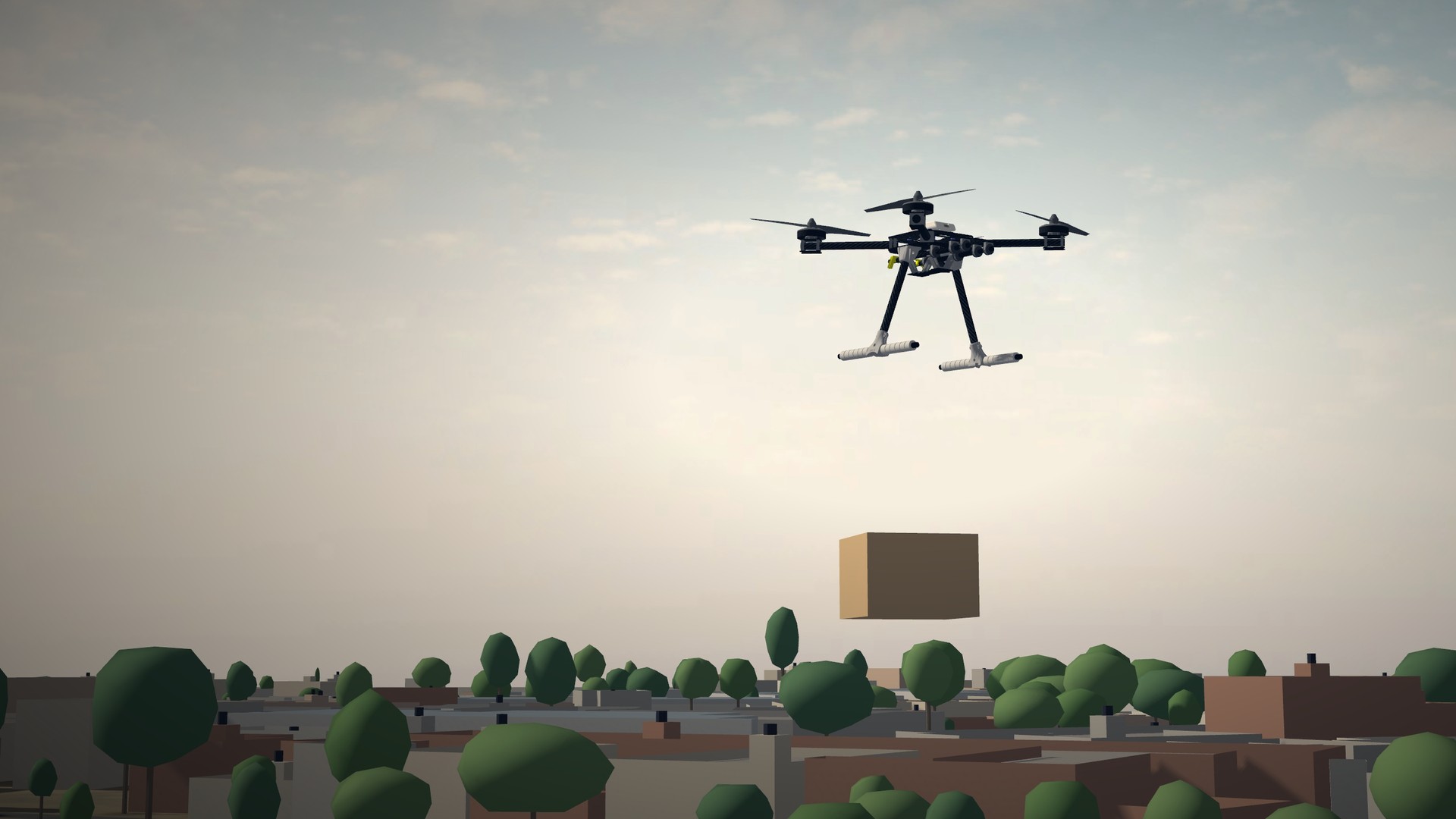
SkyDrop drone flying in the Expo simulator

AUTONOMOUS DELIVERY DRONE

A fleet that
remembers.

Every mission adds knowledge.
Persistent obstacle memory for the next delivery.

Explore the system ↓
ACTUAL PROJECT CAPTURE / SIMULATIONSCROLL TO DISCOVER ↓
01 — 05
THE SKYDROP STORY
Lidar obstacle avoidanceReroute / detour planningShared fleet memory

01 / INTELLIGENCE THAT CARRIES FORWARD

A delivery ends.
Its knowledge stays.

SkyDrop brings autonomous delivery, Lidar obstacle avoidance and route planning into one working simulation project. At its centre is a shared memory: observations from one mission can inform later flights.

Multi-fleet memory aware system
Persistent shared architecture. Successive single-drone demonstrations.

Recorded obstacle avoidance in the simulator
01 / 03
Sense the surroundings.
REAL SIMULATOR IMAGERY

01 / OBSTACLE AVOIDANCE

A clear view
of what is ahead.

Lidar observations inform obstacle memory while the collision guard checks the path. The supplied map-off demonstration flies through dense housing at a planned 6 m cruise altitude.

02 / REROUTE + DETOUR

The route
can change.

When the path is blocked, the planner searches for a detour. In the recorded mission, repeated replanning also triggers a climb over the obstacle before the flight continues.

03 / SHARED FLEET MEMORY

Experience becomes
shared knowledge.

Learned obstacle cells persist in the shared service. Later missions query that memory before planning, carrying forward observations instead of starting with an empty map.

Concurrent multi-drone operations remain a validation milestone.

02 / THE RECORDED DIFFERENCE

The next mission
starts with experience.

45Route plans / empty memory
28Route plans / learned memory

The repeat map-off mission began with 2,106 learned obstacle cells. Both missions completed. These are two recorded runs of the same delivery scenario, not a general performance guarantee.

Read the evidence and testing scope

Source: lowflyA and lowflyB mission logs, 14 November 2026. First run: 45 route plans and two climbs. Repeat: 28 route plans and one climb. A separate city-map-enabled run started with 3,979 learned cells and completed with three route plans and no climbs. It is not a map-only comparison. All results are software-in-the-loop simulation.
03 / A COMPLETE DELIVERY

Roof.
Street.
Home.

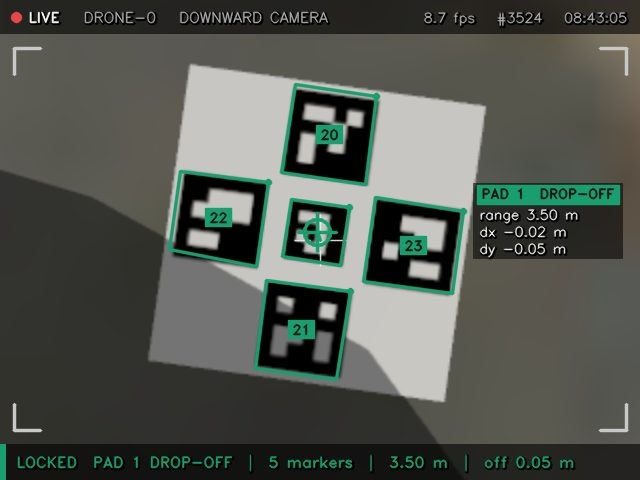
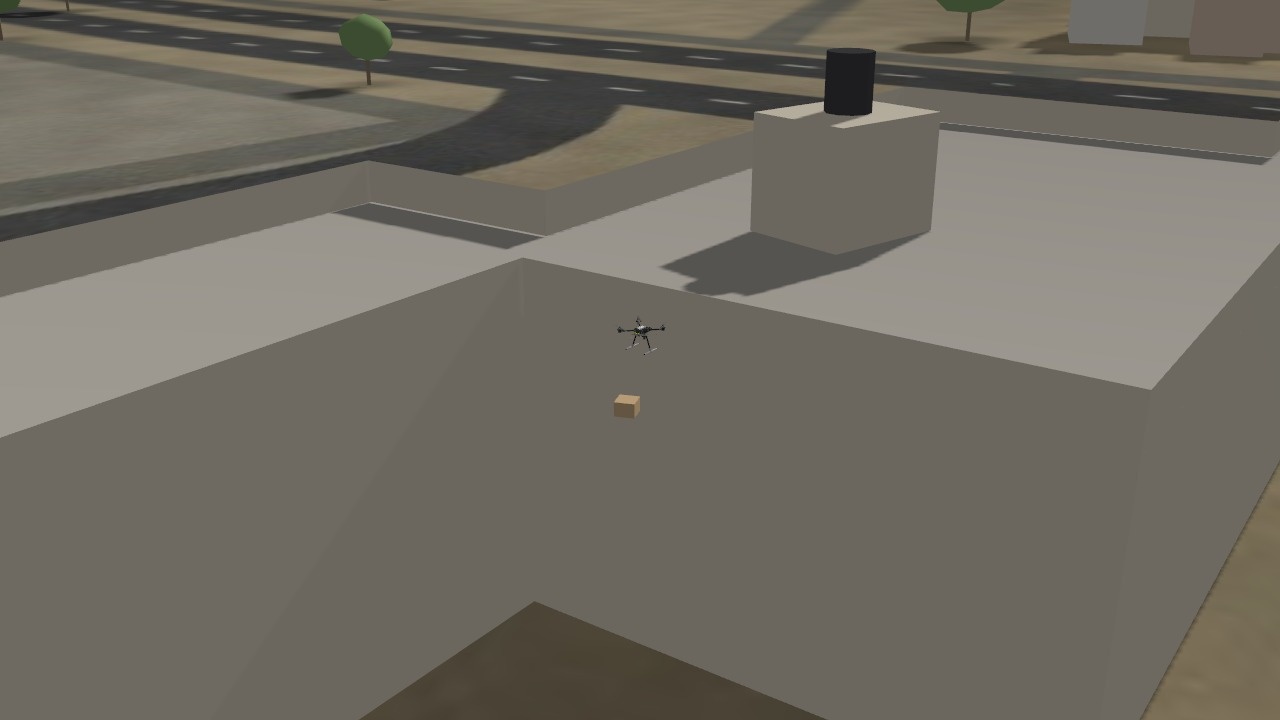
A single mission collects from an Expo hall rooftop, delivers to a street landing site and returns home. The onboard camera uses ArUco markers to guide the final approach.

8.5 cmRoof3.2 cmStreet7.3 cmHome
Showcase touchdown offsets against simulator ground truth.
Actual downward camera detecting ArUco landing markers
Onboard vision / recorded simulator capture

04 / WATCH THE PROJECT

See the mission unfold.

A 2 minute 15 second tour of the working simulation. Captioned, with playback speeds labelled.

Download the demonstration ↗

05 / BUILT TODAY. DEVELOPING NEXT.

A working foundation
for autonomous logistics.

Demonstrated in simulation

Autonomous mission sequence
Lidar obstacle avoidance
Reroute and detour planning
Persistent memory across missions
Camera-guided precision landing

The next milestones

Concurrent fleet validation
Real-airframe trials
Further navigation research

Forecasting and degraded-navigation capabilities in the concept note are proposals, not demonstrated features.

LET’S TALK AT THE STALL

The next chapter
starts with a conversation.